
• Skip to main content
  • Skip to primary sidebar

Conscious Clarity Center

Spiritual Transformative Education

  • Home
  • About
  • Blog
  • Programs
    • Online Interactive Programs
      • Eight-Week Comprehensive Self-Improvement Discovery Plan
      • Conscious Clarity Energy Process™ – Level One – Soul Merge
    • Conscious Clarity Center Article Directory
      • Conscious Clarity Center Spiritual Life Articles
      • Conscious Clarity Center Soul Merge Articles
      • Conscious Clarity Center Happiness Articles
      • Conscious Clarity Center Emotional Well Being Articles
      • Conscious Clarity Center Relationships Articles
      • Conscious Clarity Center Career Articles
      • Conscious Clarity Center Financial Freedom Articles
      • Conscious Clarity Center Physical Health Articles
    • Conscious Clarity Energy Process™
      • Introduction to the Conscious Clarity Energy Process™ Seminar
    • Illustrations Conscious Clarity Energy Process
    • Life Plan Balance Categories
    • Spiritual Life Coach
    • Resources
  • Books
  • Contributors
  • Coaching
  • Events
  • Donate
  • Newsletter
  • Contact

Emotional Well Being

Mindfulness in Relationships

July 29, 2025 By Terry Swejkoski Leave a Comment

How Mindfulness Can Transform Your Relationships

Relationships are at the heart of the human experience—whether they’re with a partner, friend, family member, or colleague. Yet, maintaining meaningful connections often presents a challenge, especially in moments of emotional conflict or misunderstanding. Mindfulness offers a powerful antidote, helping us cultivate deeper, more compassionate relationships through presence and emotional awareness.

Inspired by the teachings in Consciously Live What You Feel, this blog post explores how mindfulness can enhance relationships. Along the way, I’ll provide practical tips for communicating more effectively, resolving conflicts with kindness, and building empathy to strengthen bonds.

The Role of Mindfulness in Relationships

At its core, mindfulness is about being fully present with your thoughts, feelings, and surroundings, free of judgment. When applied to relationships, mindfulness enables you to truly see and connect with the other person, rather than letting assumptions, distractions, or emotions cloud your interactions.

One of the central themes in Consciously Live What You Feel is the concept of emotional awareness—tuning into your feelings and understanding their purpose. This self-awareness serves as the foundation for mindful relationships, allowing you to approach others with clarity, authenticity, and empathy.

Mindfulness supports relationships in three key ways:

  1. Encourages Emotional Regulation: By recognizing your emotions as they arise, you’re less likely to act out in anger or frustration. Instead, you create space to choose a calm, thoughtful response.
  1. Fosters Active Presence: Mindfulness ensures you’re truly present in your interactions, fostering a sense of connection and value for everyone involved.
  1. Strengthens Empathy: Awareness of your own emotions helps you better understand and respond to the feelings of others.

These principles aren’t just abstract concepts; they can be applied directly to everyday interactions with those you care about.

Practical Tips for Mindful Communication

Communication is the backbone of any relationship, but even the most well-intentioned conversations can go awry without mindfulness. These practices can help you bring presence and compassion into your dialogue.

  1. Listen Without Interrupting

Active listening is an essential component of mindful communication. When the other person is speaking, focus entirely on their words, tone, and body language without planning your response or jumping in with comments.

Practical Tip:

Before responding, pause for a moment to process what was said. A pause signals to the other person that their words truly matter to you and ensures your reply is thoughtful.

Mindful Reminder:

If your mind starts to wander, gently guide your attention back to their voice.

  1. Speak with Intention

Mindfulness in communication also means being intentional with your words. Ask yourself whether what you’re about to say is accurate, necessary, and kind. This practice helps reduce misunderstandings and fosters trust.

Practical Tip:

Use “I” feeling statements instead of “you” accusative statements to express your feelings. For example:

  • “I feel upset when plans change suddenly,” instead of, “You always cancel plans.”

This approach reduces defensiveness and fosters healthier dialogue because you are sharing your feelings rather than just your thoughts.

  1. Cultivate Curiosity in Conversations

Approach discussions with a curious mindset rather than jumping to conclusions or judgments. Ask open-ended questions to gain a deeper understanding of the other person’s perspective.

Practical Tip:

Phrases like “Can you help me understand how you’re feeling?” or “What can I do to support you?” show genuine interest and care.

  1. Pause Before Reacting

When emotions run high, it’s easy to blurt out hurtful words you may later regret. Mindfulness teaches us to pause, breathe, and assess whether our reaction aligns with our true intentions.

Practical Tip:

Count to three while taking deep breaths before responding during heated moments. This short pause can create enough space to calm your thoughts.

Mindful Conflict Resolution

Conflict is inevitable in any relationship, but how we handle it determines whether it strengthens or strains the bond. Mindfulness helps us approach conflicts with compassion and collaboration rather than blame or defensiveness.

  1. Acknowledge Your Feelings

Mindfulness begins with introspection. Identify and name what emotions you’re feeling, whether it’s anger, sadness, or frustration. This awareness prevents emotional overwhelm, allowing you to approach the conflict with conscious clarity.

Practical Tip:

Say to yourself, “I’m feeling [emotion] because [trigger], and that’s okay.” Recognizing your emotions helps diffuse their intensity. Most people are triggered by past experiences that did not have a positive outcome. Some people may anchor these negative feelings deeply in their subconscious minds. Therefore, be mindful of these feelings.

  1. Focus on the Present Issue

Often, conflicts escalate because past grievances are brought up in the conversation. Mindfulness encourages focusing solely on the current issue rather than dwelling on past hurts.

Practical Tip:

If you feel tempted to mention past incidents, remind yourself, “This conversation is about resolving this situation,” not past grievances that still require resolution at a later time.

  1. Practice Empathy Toward the Other Person

Mindfulness helps you see beyond your one-sided perspective and consider the other person’s emotions and intentions. This shift fosters compassion and reduces the urge to assign blame.

Practical Tip:

Try to see the situation through their eyes. Ask yourself, “What need or fear might be driving their actions?”

  1. Collaborate on a Solution

Approach the conflict as a team. Instead of “me vs. you,” frame it as “us vs. the problem.” Work together to find a resolution that satisfies both parties.

Practical Tip:

End the discussion with actionable steps, such as, “Moving forward, how can we handle this better together?”

Building Empathy Through Mindfulness

Empathy—the ability to understand and share another person’s feelings—is a natural result of mindful living. By cultivating empathy, you can foster relationships built on mutual respect and understanding.

  1. Validate Their Feelings

People often share emotions not to seek advice but to feel heard. Validation means acknowledging their experience without judgment or trying to fix it.

Practical Tip:

Say, “I can see why you’d feel that way,” or, “That sounds challenging.” These phrases communicate understanding and acceptance.

  1. Practice Loving-Kindness Meditation

This mindfulness exercise encourages compassion toward both yourself and others. Visualize the person in your mind and silently repeat phrases like, “May they be happy. May they be healthy. May they find inner peace.”

Practical Tip:

Practice this meditation regularly, especially for people you find difficult to connect with.

Explore Mindful Living with Consciously Live What You Feel

Relationships flourish when we meet them with authenticity, presence, and empathy. Mindfulness provides a doorway to deeper, more meaningful connections—not by changing the people around you but by transforming how you show up for them.

Consciously Live What You Feel dives deeply into the principles of mindfulness and emotional awareness, offering actionable insights and practices for a more conscious life. Whether you’re seeking to strengthen an existing relationship or build new ones, this book serves as a trusted guide.

Take the First Step

Are you ready to transform your relationships and live with greater connection and intention? Explore the teachings of Consciously Live What You Feel and discover how mindfulness can enrich every interaction. Begin your mindful relationship journey today—because stronger connections are just a breath away.


Filed Under: Emotional Well Being, Relationships, Spiritual Partners, Terry Swejkoski Tagged With: Consciously Live What You Feel, Emotional Connection, Empathy, Mindful Relationships

Reader Testimonials

July 27, 2025 By Terry Swejkoski Leave a Comment

Reader Testimonials for Consciously Live What You Feel: Stories of Transformation and Growth

The words of those who’ve walked the path before us can be a guiding light, offering insight into how a particular experience might touch our own lives. For Consciously Live What You Feel readers, the book has been that pivotal experience—an invitation to explore emotional awareness, mindfulness, and self-discovery. This book has not only inspired but also transformed the lives of many who’ve embraced its teachings.

Below, you’ll find highlights from reader testimonials that capture the essence of this book’s impact. Their stories paint a vivid picture of how Consciously Live What You Feel bridges the gap between who we are and who we aspire to become.

A Beacon of Clarity in a Busy World

“My mind has always been cluttered,” says Dana R., a reader who struggled with balancing life’s many demands. “I never realized how loud it was until I read this book. Consciously Live What You Feel showed me how to pause. Through its pages, I learned how to listen to myself—the real me hiding beneath all the noise.”

Dana’s experience reflects one of the book’s central themes: creating space for self-awareness. For many readers like her, the book offers practical insights into quieting the mental chaos and connecting with inner clarity. This intentional act of pausing is not about avoidance—it’s about making room for understanding.

Personal Growth Through Emotional Awareness

“For years, I thought avoiding my emotions made me stronger,” says Evan L., echoing a sentiment shared by many readers. “But this book taught me that emotional awareness doesn’t make you weak—it makes you free. For the first time in years, I feel like I’m living, not just surviving.”

Terrance (Terry) Swejkoski’s approach to emotions—viewing them as guides rather than obstacles—is an empowering perspective. Testimonies like Evan’s highlight the relief and growth that come from learning to honor all emotions, not just the pleasant ones. By practicing emotional awareness, readers are uncovering deeper layers of resilience and self-compassion in their daily lives.

A Guide to Meaningful Relationships

“After reading Consciously Live What You Feel, I finally understand why my relationships never felt fulfilling,” shares Ana M. “I was so unaware of my emotional patterns that I kept repeating the same mistakes. Now, I see both myself and others more clearly. I’m able to show up for the people I love in ways I never thought possible.”

Ana’s testimonial highlights another powerful aspect of the book—how mindfulness and emotional awareness permeate our relationships. Terry’s practical guidance encourages readers to cultivate empathy and presence, thereby transforming their connection with those around them.

The ability to strengthen bonds through deeper understanding is an enduring theme throughout the book, providing value not only to the individual but also to the community they’re part of.

A Gateway to Inner Peace

“I used to think mindfulness was something only monks could achieve,” writes Jason P., a beginner to mindfulness practices. “But Terry writes with such compassion and simplicity that I felt encouraged to try. The exercises are approachable for anyone, and they’ve made such a difference in how I experience my day-to-day life.”

It’s easy to feel intimidated by the concept of mindfulness, especially for those just starting to seek spiritual guidance. But as Jason notes, Terry breaks down complex ideas with warmth and clarity. His book empowers readers to take baby steps toward mindfulness, building confidence as they begin to notice its positive effects.

Sparked Conversations That Change Lives

“So many of the discussions I had after reading this book left me in tears—the good kind,” says Riley W. “This book didn’t just help me; it helped my friends and family, as we started having conversations we’d avoided for years. It was like we all woke up to each other.”

Riley’s story demonstrates the ripple effect that mindfulness and emotional awareness can have. What begins as an individual transformation often blossoms into collective healing, as readers share their experiences and learnings with those closest to them.

The Core Message That Resonates

A common thread running through these testimonials is the resounding appreciation for Consciously Live What You Feel’s compassionate and relatable message. Readers consistently praise the author for his ability to present emotional and spiritual growth not as distant goals, but as accessible practices anyone can incorporate into their lives.

This book is not about achieving perfection or following a rigid set of rules; it’s about making progress, showing kindness to ourselves, and recognizing the value of being present.

Your Journey Awaits

For those who have discovered Consciously Live What You Feel, the book has been a gentle guide and an unwavering friend on their path to personal transformation. From fostering self-awareness to building stronger relationships, it encapsulates lessons that are universally powerful yet deeply personal.

Are you ready to join this community of readers? To discover the joys of living more consciously and authentically? If these stories have sparked something within you, consider this your invitation to pick up the book and begin your mindful transformation.

Explore Consciously Live What You Feel Today

Transformation begins with a single step—and your step could be immersing yourself in the teachings of Consciously Live What You Feel. Why not join the conversation? Allow the voices of past readers to inspire your own. Together, we grow stronger. Together, we uncover the depths of who we truly are.


Filed Under: Conscious Clarity Center Inc, Emotional Well Being, Paradigm Shift, Spiritual Transformative Education, Terry Swejkoski Tagged With: Consciously Live What You Feel, Mindfulness Impact, Reader Testimonials, Transformation Stories

Emotional Awareness

July 25, 2025 By Terry Swejkoski Leave a Comment

Understanding Emotional Awareness and Its Role in Mindful Living

We often find ourselves navigating life on autopilot, reacting to situations without truly understanding why we feel a certain way. Our emotions, a vibrant spectrum of joy, sadness, anger, and everything in between, are more than fleeting reactions; they serve as profound messengers, inviting us to listen, reflect, and connect on a deeper level. Emotional awareness—the ability to recognize, understand, and work with these emotions—is a critical part of personal growth and mindful living.

Inspired by the teachings in my book Consciously Live What You Feel, this post explores the essence of emotional awareness, its importance in fostering self-discovery, and practical ways to nurture it in our daily lives.

What Is Emotional Awareness?

At its core, emotional awareness is about being in tune with your emotions and understanding how you feel about them. It involves identifying your feelings, understanding their triggers, and perceiving how they affect your actions and interactions. More than that, it’s the practice of accepting those emotions without judgment.

Many of us suppress or deny certain feelings, believing them to be unproductive or harmful. But emotions—whether they bring comfort or discomfort—carry valuable insights. They reflect our needs, boundaries, and values. When we learn to observe and welcome them, we unlock the ability to respond to life with greater clarity, compassion, and intent.

Why Does Emotional Awareness Matter?

  • It Deepens Self-Understanding

Emotional awareness acts as a mirror, reflecting our inner world. By recognizing what we feel and why, we gain insight into our desires, fears, and patterns. This self-awareness forms the foundation for personal transformation and authenticity.

  • It Enhances Mindful Living

Mindfulness and emotional awareness are closely intertwined. When we’re aware of our emotions, we’re better equipped to stay present and engage fully with our experiences. This connection creates a richer, more grounded life.

  • It Boosts Emotional Resilience

Life inevitably brings challenges and setbacks. Emotional awareness provides us with the tools to process these difficulties in healthy ways, thereby reducing the tendency to react impulsively or avoid discomfort.

  • It Strengthens Relationships

Being aware of your own emotions allows you to respond to others with empathy. This awareness enhances communication, builds trust, and fosters deeper, more meaningful connections.

How to Develop Emotional Awareness

Cultivating emotional awareness is a lifelong practice, not a destination. Here are five practical steps I feel will assist you in beginning to integrate this essential skill into your daily life:

  1. Create Space to Pause

Life moves quickly, leaving little room to notice our emotional state. To develop emotional awareness, begin by incorporating intentional pauses into your daily routine. These moments of stillness allow you to check in with yourself.

How:

Set aside time to sit quietly, close your eyes, and tune in to your body. Ask yourself questions like, “What am I feeling right now?” or “How does my body feel in this moment?” This simple act of noticing helps you reconnect with your inner experience.

Tip:

Use reminders, like an alarm on your phone or visual cues, to establish the habit of regular emotional check-ins.

  1. Name Your Feelings

Putting words to your emotions can demystify them and make them easier to process. Instead of dismissing feelings as vague discomfort, explore and define them.

How:

When you experience a strong emotion, pause and identify it. Is it frustration or sadness? Maybe it’s a mix of excitement and anxiety. There’s no “right” answer—what matters is your honesty.

Tip:

Journaling can be a powerful tool here. Write about your emotions and their possible triggers to gain a deeper understanding of your internal world.

  1. Practice Self-Compassion

Often, we resist certain emotions because they feel uncomfortable, inconvenient, or shameful. Emotional awareness invites us to approach these feelings with compassion instead of judgment.

How:

When you notice a complex emotion, please take a moment to acknowledge its presence. Remind yourself that it’s okay to feel this way. Speak kindly to yourself, as if you were comforting a loved one.

Tip:

Use affirmations like, “It’s natural to feel this way,” or, “My emotions are valid and important.” These gentle reminders can shift self-critical narratives.

  1. Explore Your Triggers

Understanding what causes your emotions can help you respond to triggers thoughtfully rather than impulsively. This understanding is invaluable for emotions that feel overwhelming or repetitive.

How:

Reflect on recent emotional experiences. What circumstances or interactions preceded them? Were there any patterns? Over time, developing this awareness can reveal more profound insights into your needs and boundaries.

Tip:

When you notice a pattern tied to negative emotions, consider how you can approach similar situations differently in the future.

  1. Use Mindful Practices to Stay Present

Being present allows you to experience your emotions without becoming fully consumed by them. Mindfulness practices, such as meditation or mindful breathing, anchor you in the moment and deepen your emotional awareness.

How:

Try a simple mindful breathing exercise when you feel a strong emotion. Focus on your breath, observing it without trying to change it. Allow the emotion to rise and fall naturally, noticing its impermanence.

Tip:

Combine mindfulness with movement, such as yoga or walking meditation, if sitting still feels challenging.

The Path Toward Greater Emotional Awareness

Developing emotional awareness is an ongoing process that requires patience and a curious mindset. By bringing mindfulness to your emotions, you not only foster a deeper understanding of yourself but also cultivate a life of greater balance and harmony.

It’s essential to approach this practice with gentleness. Remember, the goal isn’t to become “perfect” at managing emotions or to avoid unpleasant feelings altogether. Instead, it’s about creating space for all emotions to exist, viewing them as valuable teachers rather than obstacles.

Explore Emotional Awareness with Consciously Live What You Feel

My book, Consciously Live What You Feel, is a profound guide for anyone seeking to deepen their emotional awareness and understanding. The book goes beyond theoretical concepts, offering practical techniques and compassionate insights to help readers fully embrace and work with their emotions.

By exploring the pages of my book, you’ll find tools to integrate mindfulness into your daily life, enhance your connection with yourself, and unlock the inner clarity that comes from living consciously.

Your Invitation to Begin

If you’ve been yearning to connect with your emotions on a deeper level, now is the time to start. Begin by exploring the simple practices shared above, and take the next step by immersing yourself in Consciously Live What You Feel. You deserve the peace and growth that comes with emotional awareness—and it’s all within your reach.

Discover the Book Today

Order your copy of Consciously Live What You Feel and start your transformation. Whether you are just beginning your emotional awareness journey or have already made progress, this book offers guidance, support, and inspiration as you take your next steps.


Filed Under: Emotional Well Being, Spiritual Transformative Education, Terry Swejkoski Tagged With: Consciously Live What You Feel, Emotional Awareness, Mindful Emotions, Self Awareness

The Role of Fathers in a Chaotic World

June 13, 2025 By Terry Swejkoski Leave a Comment

Father’s Day provides an opportunity to pause, reflect, and celebrate the profound impact fathers have on shaping the lives of their children, their families, and the broader world around them. Yet, as we look around, it’s clear that the world often feels unsteady. We’re surrounded by noise, competing narratives, and unrest, leaving many to wonder how to find truth amidst the chaos. Fathers hold a unique opportunity to embody peace, love, and clarity, leading their families with wisdom and compassion.

Drawing from the teachings in Consciously Embrace Your True Personality, we’re reminded that peace and truth begin internally. By nurturing our inner selves and rejecting the lure of chaos, fathers can act as beacons of stability and love. This Father’s Day, let’s explore how fathers can step into this role in meaningful ways, offering guidance not just to their families but also to the world.

Fathers as Anchors of Peace

Chaos often thrives when we lose our grounding. I emphasize that the foundation of peace isn’t external but internal, arising from self-awareness and authenticity. For fathers, this means cultivating calm within themselves first before passing it along to others.

Children notice everything. They absorb not only the words of their fathers but also their energy, tone, and actions. A father who demonstrates calm during turbulent times offers an invaluable lesson to his children—that peace can exist no matter the circumstances around us.

How Fathers Can Embody Peace:

  • Adopt stillness in daily life: Practice mindfulness or meditation to create space for reflection. Even brief moments of intentional breathing can help you find a sense of calm.
  • Respond, don’t react: Chaos often tempts us into reacting impulsively. Instead, practice stepping back, observing, and choosing to respond with intention.
  • Model resilience: When challenges arise, show your family that adversity can be met with courage and composure.

Peace begins with one person but expands outward, touching everyone around them. A peaceful father inspires a peaceful family, and in turn, contributes to shaping a more harmonious world.

The Power of Love as a Guiding Principle

Love, in its truest form, is a force that unites, heals, and uplifts. It’s not simply an emotion but a conscious choice. My work reminds us that love rooted in truth, not ego or fear, is what transforms relationships and fosters deeper, more meaningful connections.

For fathers, practicing love means being present for their families, offering kindness even in moments of frustration, and showing vulnerability. It requires looking beyond surface-level distractions and tuning into the heart of every relationship.

Ways Fathers Can Show Love:

  • Be fully present: Put away distractions and give your undivided attention to your family, reminding them that they are your priority.
  • Offer unconditional acceptance: Celebrate your children not only for their successes but also for their struggles and imperfections.
  • Lead by example: Show your children what love looks like in action through acts of generosity, empathy, and consistency.

When fathers lead with love, they teach their families that relationships matter deeply. This approach creates a ripple effect, helping future generations approach life with compassion and understanding.

Understanding Truth in the Midst of Chaos

Truth is essential to navigating chaos. However, the truth isn’t always easy to discern. It requires deep introspection and the willingness to distinguish between illusions and reality.

For fathers, this means being courageous enough to seek out truth in themselves and the world. It’s about questioning assumptions, standing firm in values, and helping their families build an awareness of what is real versus what is fleeting.

How Fathers Can Teach and Live Truth:

  • Foster open conversations: Encourage dialogue within the household where ideas, concerns, and emotions are expressed freely without fear of judgment.
  • Demonstrate integrity: Align words with actions to show that living truthfully isn’t just a concept but a way of being.
  • Guide in spiritual exploration: Whether through shared practices or discussions about beliefs, help your family find their unique connection to truth.

By understanding and living the truth, fathers create an environment where clarity prevails over confusion and integrity becomes the foundation of their family.

The Father’s Role in a Chaotic World

The world may be noisy and overwhelming at times, but fathers are uniquely positioned to act as steady, guiding lights. By embodying peace, practicing love, and uncovering truth, fathers take on the role as architects of harmony within their homes and communities.

This Father’s Day, take a moment to honor and celebrate the fathers who have answered this calling with open hearts. For fathers themselves, it’s an opportunity to reflect on how they might deepen their practice of these values. Every step toward peace, every act of love, and every commitment to truth holds the power not only to transform families but also to ripple out into the world.

To every father navigating a chaotic world, know this: Your presence holds immeasurable value. Through your love, your grounding energy, and your willingness to seek truth, you leave a legacy greater than words can capture.

Filed Under: Emotional Well Being, Spiritual Transformative Education, Terry Swejkoski Tagged With: Consciously Embrace Your True Personality, Father's Day, Life's Little Secrets Book Series, Self Reflection, Spiritual Consciousness

Sound Bath Experience at New Moon Yoga Collaborative

May 21, 2025 By Terry Swejkoski 1 Comment

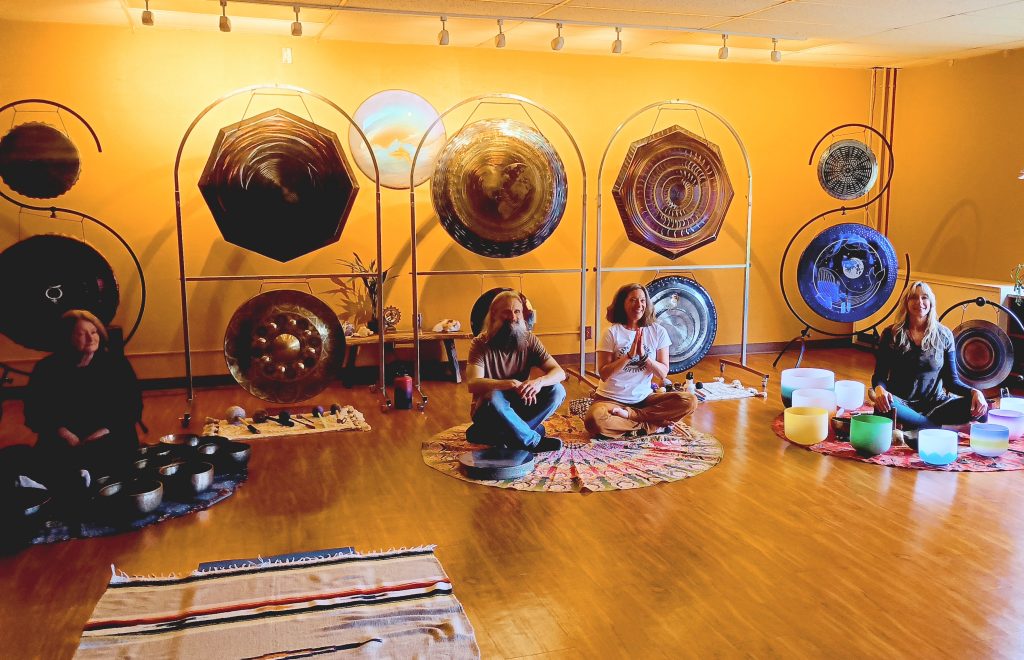
Sound Bath Experience at New Moon Yoga CollaborativeLast night, we had an amazing sound bath experience at New Moon Yoga Collaborative with Eva Tytar and her group, the Earth Tones. Sound bath moves you through a high-energy journey to soothe the nervous system and restore balance.

Eva plays a collection of antique bowls handmade by Tibetan monks. These bowls have been used for centuries for healing and meditation.

Collaboratively, the Earth Tones group provides an experience that opens each chakra by using different frequencies to realign the cells of the physical body to their optimal vibrational state. At a deeper level, the brain is taken to the meditative states of theta and delta waves, depending on the participant’s level of openness.

Please take a few moments to review all the offerings on the New Moon Yoga Collaborative website in Traverse City, Michigan.


Filed Under: Emotional Well Being, Spiritual Conscious Clarity Tagged With: New Moon Yoga Collaborative, Sound Bath, Spiritual Consciousness

The Spiritual Significance of Mother’s Day

May 8, 2025 By Terry Swejkoski Leave a Comment

The Spiritual Significance of Mother’s DayMother’s Day is far more than a day for flowers and breakfast in bed. It is an opportunity to pause, reflect, and honor the sacred bond between a mother and her child. Beyond the gestures of appreciation lies a profound spiritual significance that connects us to the universal essence of nurturing, selflessness, and unconditional love.

Motherhood as a Divine Manifestation

Motherhood embodies the purest form of divine energy. Across many spiritual traditions, the mother archetype is seen as an extension of the Creator’s nurturing force. She is the vessel through which life comes into being, the teacher who guides with wisdom, and the protector who provides sanctuary.

When we honor mothers, we also affirm the sanctity of life and recognize the spiritual act of creation. A mother’s capacity to love unconditionally, guide selflessly, and nurture endlessly reflects the divine energy that sustains the cosmos.

A Day for Gratitude and Reflection

Mother’s Day allows us to connect with gratitude on a deeper level. It encourages us to remember not just the physical sacrifices and hard work that mothers devote, but also the spiritual gifts they bring into our lives. These gifts can appear as:

  • Patience in the face of challenges
  • Wisdom shared through life’s trials
  • Unwavering support and belief in our potential

By offering gratitude to our mothers, we elevate our spiritual vibrations, aligning ourselves with the virtues of love, humility, and compassion.

If your mother is no longer with you or if you grew up without a maternal figure, this day can still be meaningful. Reflecting on the universal motherly energy surrounding us can open your heart to how life nurtures and sustains you.

Nurturing as a Universal Energy

Motherhood extends beyond biology. It is a state of being expressed through anyone who cultivates love, care, and growth in others. Teachers, mentors, friends, and even strangers who offer guidance and compassion embody this universal nurturing energy.

Similarly, we are all called to share the spirit of motherhood by becoming nurturers of our communities, the environment, and ourselves. This cyclical nature of giving and receiving care creates harmony in the universe and connects us all in an unbroken chain of love.

A Spiritual Practice for Mother’s Day

Take this opportunity to deepen your connection to your earthly and spiritual mother by practicing mindful gratitude. Here is a simple exercise you can do:

  • Find a peaceful space where you can sit quietly.
  • Close your eyes and take a few deep breaths, centering yourself in the present moment.
  • Reflect on how your mother, or a maternal figure, has nurtured you. Picture these moments vividly, allowing yourself to feel the love and care they offered.
  • Silently or out loud, express your gratitude. You might say, “Thank you for the love and sacrifice that have shaped me into who I am today.”
  • Share these reflections with your mother or a maternal figure. If they have passed on, you may light a candle in their honor and send your thanks into the universe.

Closing Feelings

Mother’s Day is an invitation to honor the individual mother and the sacred lesson of motherhood itself. It reminds us to nurture one another, to love without condition, and to recognize the divine presence in selfless acts of care.

To all mothers reading this, we honor you for what you do and the profound spiritual essence you embody. You are a living testament to the divine.

May this Mother’s Day bring you serenity, love, and a renewed sense of purpose in your sacred role.

Happy Mother’s Day!


Filed Under: Conscious Clarity Center Inc, Emotional Well Being Tagged With: Embrace Joy, Mother's Day

Appropriate Boundaries for Healthy Relationships

April 27, 2025 By lynnenamka Leave a Comment

An appropriate boundary is that invisible line that separates you from the rest of the world. Appropriate Boundary SettingWithin your boundary is that personal space where you feel safe and secure. In healthy relationships, where neither person needs to control the other, both partners understand fairness and the other person’s needs. They grant each other the right to have psychological space and look out for small ways to create happiness for the other person. However, some may choose to abuse this fundamental right.

Read more…

Filed Under: Emotional Well Being, Relationships Tagged With: Boundary Setting, bullying epidemic

Women’s Resource Center Grand Traverse Donation

April 25, 2025 By Terry Swejkoski Leave a Comment

We are deeply grateful to Karen and Terry Swejkoski of the Conscious Clarity Center and the Satsang meditation group for their incredibly thoughtful donation of hygiene items for survivors of domestic and sexual violence.

These generous gifts go beyond supplies – they remind survivors that they are seen, supported, and not alone. Thank you for standing with survivors and helping create a community of compassion and healing.

Want to support or learn more about the Women’s Resource Center’s work?

Visit us at: https://www.womensresourcecenter.org

Filed Under: Emotional Well Being Tagged With: bullying epidemic, Embrace Joy, Spiritual Resources

  • « Go to Previous Page
  • Page 1
  • Page 2
  • Page 3
  • Page 4
  • Go to Next Page »

Primary Sidebar

Follow Us on Social Media

  • Facebook
  • Instagram
  • LinkedIn
  • Pinterest
  • YouTube

Recent Posts

  • Honoring Memorial Day with Mindfulness and Gratitude
  • May 21, 2026 Conscious Clarity Center Satsang Meditation
  • A Journey from Loneliness to Oneness Series Recap
  • Conscious Clarity Center Satsang Meditation April 16, 2026
  • Celebrate A Beautiful Continuation of Life
  • The Power of Love and Forgiveness
  • Deepen Your Journey – Visual Guidance Awaits
  • National Hugging Day
  • Conscious Clarity Center Satsang Meditation Group Donation
  • Conscious Clarity for the New Year

Newsletter Signup

OFFICE HOURS

Mon – Wed – Fri: 10:00 am – 2:00 pm

Phone: 231-943-2623

Email: Info@ConsciousClarityCenter.org

Location: – Leelanau Peninsula – Traverse City, Michigan 49684

Donate to Our Operations Fund

The Unseen Foundation of Spiritual … Thank you for your generosity! about Donate

Categories

RSS Subscribe to RSS Feed

  • Honoring Memorial Day with Mindfulness and Gratitude
    Honoring Memorial Day is more than just a long weekend. It’s a day of profound significance, a time to remember and honor those who have served their country, especially those […]
  • May 21, 2026 Conscious Clarity Center Satsang Meditation
      Sign up for our Newsletter to get the details. Welcome to the Conscious Clarity Center Satsang Meditation Group The Conscious Clarity Center Satsang Meditation Group meets on the third […]
  • A Journey from Loneliness to Oneness Series Recap
    We started with loneliness and ended with Oneness. This video is a powerful recap of our 10-part series on transforming the pain of isolation into the profound peace of universal […]
  • Conscious Clarity Center Satsang Meditation April 16, 2026
    The Conscious Clarity Center Satsang Meditation Group meets on Thursday, April 16, 2026, Time: 7:30 to 9:00 pm The monthly Conscious Clarity Center Satsang Meditation is scheduled for Thursday, April […]
  • Celebrate A Beautiful Continuation of Life
    Tribute for My “Big Brother” Dennis J. Swejkoski We gather today not to mourn an end, but to celebrate a beautiful continuation. My big brother, Dennis J. Swejkoski, has stepped […]

Search

  • Blog
  • Home
  • About
  • Contributors
  • Books
  • Donate
  • Contact Us
  • Newsletter
  • Resources
  • Media Package

Copyright © 2026 - Conscious Clarity Center, Inc. - All Rights Reserved Worldwide